
'Trump has personally weighed in to overcome doubts and reservations about Pakistan among his top advisors.'

'We should watch -- in the near term -- for signs that the two have totally fallen out at a personal, political level.' 'Trump and Modi know how to be dealmakers, but they also know how to hold a grudge.'

China's official media on Sunday criticised United States bomb attacks on Iranian nuclear sites as a further step toward the abyss, while experts in Beijing said the American bunker-buster bombs used in strikes may not be enough to destroy Iran's nuclear plants hidden deep underground.

A Chinese team of virologists has discovered a new bat coronavirus that can infect human cells, raising concerns about potential animal-to-human transmission. The virus, a new lineage of the HKU5 coronavirus, uses the same human receptor as the virus that causes COVID-19. The study, led by Shi Zhengli, a prominent virologist at the Wuhan Institute of Virology, was published in the journal Cell. The discovery comes amid ongoing scrutiny of the Wuhan lab, which was previously accused of being the source of the COVID-19 pandemic. The Chinese government has denied any involvement in the virus's origin and insists that the Wuhan lab never engaged in gain-of-function studies on coronaviruses.
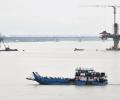
'China could intentionally release excess water.' 'The North East is already flood-prone during the monsoon, and even a controlled release from Chinese dams (during the monsoon) could worsen flooding.'

At a dialogue between the Ministry of External Affairs, International Institute for Strategic Studies, London and IDSA, Foreign Secretary Ranjan Mathai spoke extensively on the topic of 'Forging Stability in Asia'. He talked about the challenges and goals that India faces while trying to strengthen its ties across the Asian continent.
British Foreign Secretary William Hague on Thursday reiterated his country's support for permanent seats for India and Japan in the United Nations Security Council, and said the council should be expanded.
India's economy is slowing down due to domestic issues, says Sumit Ganguly.
It is against China's interest to shift away from dollar.
Iran could have a nuclear bomb by 2010, a leading international think-tank has warned. According to the International Institute for Strategic Studies, Iran will amass enough low-enriched uranium this year which could put it on course to build a nuke weapon by the end of the next year, The Daily Telegraph reported.
Underlining that India has worked to promote better ties with Pakistan, Foreign Secretary Nirupama Rao has said that the relations with Islamabad can only grow in an atmosphere free of terror and violence.
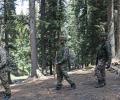
'It is typical of China's strategic deception of making virtue out of necessity,' observes Rup Narayan Das.
Lack of progress on these issues can cast a shadow on the ongoing dialogue process," he said.
Aligning India with long-standing Pakhtoon aspirations may be a potentially potent lever, says Shyam Saran
Pakistan's new President Asif Ali Zardari may face threat from his country's army, which remains unwilling to counter a resurgent Taliban effectively, a leading think tank claimed on Thursday."The Pakistani army remains unable or unwilling to counter effectively the resurgent Taliban and Zardari's major challenge is to gain the trust of the army, which in turn may pose a threat to him," the International Institute for Strategic Studies said.
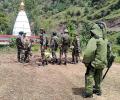
'Unfortunately, India and Pakistan could learn a 'lesson' from this conflict that will make them more likely to use these weapons against each other in the future.' 'Rounds of missile and drone attacks could be more routine features of their hostility, just like artillery fire has become a familiar fact of life along the Line of Control.'
The prime focus of the hearing is to review the findings of International Institute for Strategic Studies about the Khan cartel
The IISS Report which was released and discussed extensively in London last week has argued that many of the techniques perfected by Khan were replicated by a number of other countries.
'At least some of Khan's associates appear to have escaped law-enforcement attention and could, after a period of lying low, resume their black market business.'
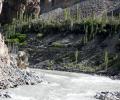
'China has thus far been cautious, emphasising its focus on development rather than weaponising water resources.'
An International Institute of Strategic Studies report said the US and Britain top the list of arms sellers.
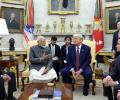
'By his words, actions, and body language during their joint press appearance wanted to convey his personal respect and, more broadly, his desire to work closely with India.'
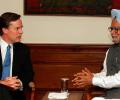
The India-US nuclear deal was aimed at ending India's nuclear isolation and nuclear apartheid, recalls Rup Narayan Das.

'My life has been quite difficult. I felt I could see it in words. I thought if everyone else can write, then I can too.'

Preparing for the XAT requires a balanced approach, focusing on conceptual understanding, regular practice, and strategic planning, says Rahul K Shukla, convenor, XAT and admissions, XLRI-Xavier School of Management.

Here is how the two countries stack up militarily, according to a report in AlJazeera.com.
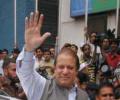
Pakistan may improve its ties with India and fine-tune its anti-terror strategy under the new government headed by Pakistan Muslim League-N leader Nawaz Sharif, Chinese analysts have said.

Strategic consideration were the reasons behind frequent meetings between United States President Barack Obama and Prime Minister Narendra Modi, Chinese state-run media said on Wednesday and cautioned India that it cannot rise by "containing" China or picking one side against the other.

New Delhi has reached out to Moscow while waiting for a new president in Washington. New Delhi knows well that in international relations, there are no permanent friends or foes, only permanent national interests, points out Dr Rup Narayan Das.
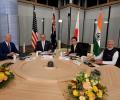
Saturday's Quad meeting in Delaware is taking place against the backdrop of China's assertive behaviour in the South China Sea, its sabre-rattling in the Taiwan Strait and increasing footprints in the Pacific and Indian Ocean, asserts Rup Narayan Das.

186,267 Indian students were studying in the US in 2016-2017.

'We have to keep a watch because India-Sri Lanka has a history that whenever there has been a change in government, either the connectivity projects have been questioned or cancelled or revived.'

'It is our duty to keep space sustainable and free of debris.'

The central government's Great Nicobar development project, proposed around an unprecedented transhipment port, will be executed to keep environmental impact minimal, and is essential as it is of national importance, the government has said amid calls to abort the controversial project due to ecological concerns, the Centre said in an official statement.
Afghan politician Ali A Jalali, a former interior minister, speaks on the situation in his country.
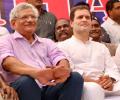
Indications that Gandhi could be invited came on a day the RSS criticised him for drawing parallels between the Sangh and Islamic radical outfit Muslim Brotherhood.
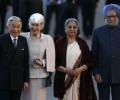
In recent years India-Japan relations have acquired rich economic content and strategic intents. Although the bilateral trade at $18 billion between the two countries is not very impressive and leaves much to be desired, the economic engagement between the two countries is both qualitatively and quantitatively noteworthy. India-Japan defence cooperation, however, has generated a lot interest among the strategic community in the context of rise of China. There has been a lot of speculation about India-Japan strategic partnership to hedge China, says Rup Narayan Das.

The study titled 'Indian Unsafeguarded Nuclear Program' published by the Institute of Strategic Studies Islamabad is co-authored by four nuclear scholars, including Adeela Azam, Ahmed Khan, Mohammad Ali and Sameer Khan.

Times have changed, situations have changed, but the basic nature of superpower geo-politics remains the same and so also India's diplomacy -- call it non-alignment, strategic autonomy or neutrality; it all depends on the time scale, notes Rup Narayan Das.
